
Participate in Worldwide Space Station Wave Campaign
Wave to the U. S., European and Russian astronauts living and working aboard the International Space Station this week through a global campaign organized by www.isswave.org. The web site offers five different ways to find out when and where to look in the...Radar Mosaics Provide Unique Views of Earth
For the last 15 years, Canada’s RADARSAT-1 has observed the Earth from space. RADARSAT-1 is a sophisticated Earth observation satellite developed by Canada to monitor environmental changes and the planet’s natural resources. Launched in November 1995, RADARSAT-1...Space Talk

Well. I think I have a new favorite movie. #projecthailmary was a fantastic adoption of the book, specifically Rocky! He was so great! Thank you to everyone who helped make such a unique and wonderful story come to life! @andyweirauthor @RyanGosling
Two #NASA astronauts aboard the International #Space Station (#ISS) are about to climb into their spacesuits and enter the vacuum of space, and you can watch the event live. The first NASA #spacewalk in nearly a year will begin at about 8 a.m. ET on…
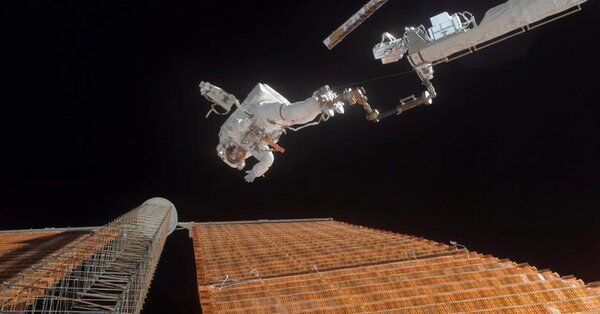
How to watch NASA’s first spacewalk in nearly a year
Two NASA astronauts aboard the International Space Station (ISS) are about to climb into their spacesuits and enter ...
www.digitaltrends.com
That’s a beautiful engine…

“Why go to the space when we have other problems here at home?”
A tale as old as time…
#1: we can do them BOTH
#2: national security, science and discovery, potential lunar economy, inspiration
