
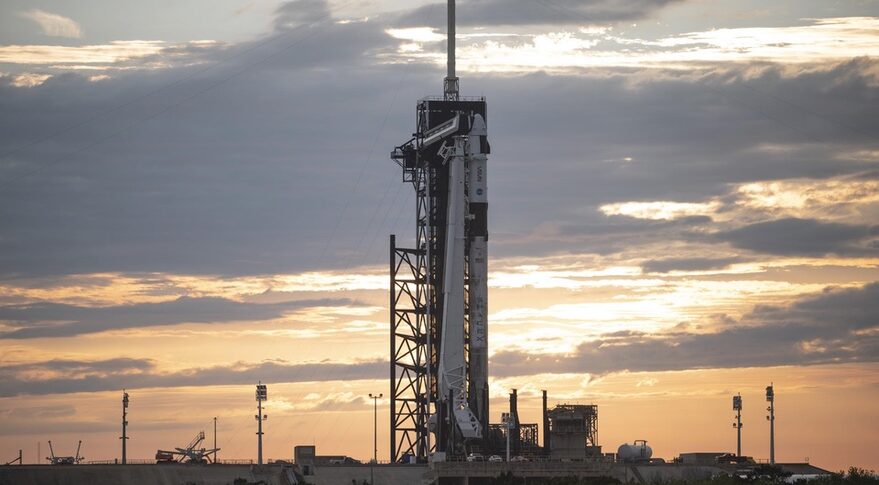
In Today’s Deep Space Extra… The next launch to the International Space Station has been delayed. As a reminder, the Senate Commerce, Science, and Transportation Committee will hold a hearing today at 10:00 a.m. EDT on the nomination of former Senator Bill Nelson to be NASA Administrator: commerce.senate.gov
Human Space Exploration
NASA completes launch readiness review for Crew-2 misskion
SpaceNews.com (4/20): NASA’s next Commercial Crew Program mission launch to the International Space Station (ISS) cleared a launch readiness review early Tuesday. NASA’s Shane Kimbrough and Megan McArthur, JAXA’s Akihiko Hoshide, and the European Space Agency’s (ESA) Thomas Pesquet will head to the orbiting laboratory for a six-month stay. The launch from NASA’s Kennedy Space Center (KSC), which was scheduled for Thursday, April 22, has been delayed until Friday, April 23, at 5:49 a.m. EDT.
NASA chief: Russian cosmonauts unlikely fly on U.S. crew capsules until next year
Coalition Member in the News – Axiom Space
Spacefllightnow.com (4/20): A proposed agreement with Russia to ensure the continuous presence of U.S. astronauts and Russian cosmonauts on the ISS is awaiting approval from the U.S State Department, according to NASA Acting Administrator Steve Jurczyk. After the agreement is approved, the U.S. will provide the draft to Roscosmos and begin negotiations. Jurczyk said Tuesday it does not appear that Russian cosmonauts will be able to launch to the International Space Station (ISS) on an American crew capsule until next year as a result of delays in authorizing the agreement.
Space Science
Strange crater suggests ancient Mars may have been frigid with occasional snowmelt
Space.com (4/20): Imagery from NASA’s Mars Reconnaissance Orbiter (MRO) is helping a Brown University-led research effort better understand Mars’ environmental past. Studies of the surface geology suggest the planet was once warmer and wetter before becoming cold and desert-like. Imagery of a large unnamed crater in the planet’s southern hemisphere dating back $3.7 to 4.1 billion years, however, displays an absence of evidence that water once flowed into the depression to form ridges. The ridges instead appear to have formed as a glacier within the crater melted from the top down, suggesting that Mars perhaps had a frigid past with only brief periods of warming.
NASA’s Ingenuity team is planning to push the helicopter as fast and far as it will go even if it crashes
BusinessInsider.com (4/20): NASA’s Ingenuity Mars helicopter could fly up to four more times over the next two weeks as its engineering team intends to learn how far and fast future versions of the aircraft could perform in the thin Martian atmosphere. Ingenuity rose to about 10 feet and flew for about 40 seconds during Monday’s history-making first flight of a helicopter on another planet. Future versions could serve as explorers and act as scouts for humans visiting Mars.
Other News
Congested orbits a top concern for U.S. Space Command
SpaceNews.com (4/20): Growing numbers of satellites in low Earth orbit are a source of apprehension and a threat to the safety of a broad spectrum of space activity if not managed, Gen. James Dickinson, commander of the U.S. Space Command, testified before the U.S. Senate Armed Services Committee on Tuesday. The Space Command currently tracks more than 32,000 objects in Earth orbit, among them more than 3,400 active satellites. The population is growing as greater numbers of commercial internet connectivity and Earth observation small satellites launch.
China is developing plans for a 13,000-satellite megaconstellation
SpaceNews.com (4/21): China plans to oversee the implementation of a national satellite internet megaconstellation. Spectrum allocation filings submitted by China to the International Telecommunication Union (ITU) in 2020 revealed plans to build sub-constellations ranging from 310 to 711 kilometers in altitude. The satellites would operate across different frequency bands.
Diversion
Celebrate Earth Day 2021 with NASA
To celebrate Earth Day 2021 (April 22) NASA is hosting virtual Earth Day events from April 21 through April 24, focused on how to live more sustainably on our home planet, and exploring the connections between Earth’s atmosphere, water cycle, forests, fields, cities, ice caps, and climate. Join the activities here.