
Menu
  • About CDSE
    • Our Team
    • Annual Report
    • Board of Directors
    • ARTEMIS and Space Exploration FAQ
  • Missions
    • Human Deep Space Exploration
    • To the Moon and Beyond
    • Artemis Mission Phases
    • ARTEMIS MISSION - RESOURCES
    • Hardware/ Systems
    • Space Science
    • What Is Deep Space?
  • Membership
    • Coalition Members
    • Join Us
  • Resources
    • Coalition Statements
    • CDSE Blog
    • Deep Space Suppliers
    • ARTEMIS Supplier Insider
    • Policy Documents
    • Deep Space Podcast
  • News
  • Contacts
  • Member Login

Finding ET – An Odds on Favorite

Aug 25, 2010 | Ask the Expert, Blog, Education Station, Exploration, Kids Space, NASA, Our Solar System, Space and Science, Space Race, Why Space

BOULDER, Colorado — Finding ET out there sooner rather than later – what are the odds? Turns out that Paddy Power — Ireland’s largest bookmaker and a leading provider of gaming services in the UK, Australia and Ireland – have slashed their odds on...

Book Review: The Fallen Sky – An Intimate History of Shooting Stars

Aug 16, 2010 | Blog, Book Reviews, Education Station, Exploration, Kids Space, Our Solar System, Space and Science

The Fallen Sky – An Intimate History of Shooting Stars by Christopher Cokinos; Tarcher/Penguin, New York, New York (soft cover) $16.95; August 2010. If you found yourself craning your neck toward the heavens of late looking for shooting stars – here’s a terrific...

Just In! Cassini Raw Imagery of Saturnian Moons

Aug 14, 2010 | Blog, Education Station, European Space Agency, Exploration, International Cooperation, NASA, Our Solar System, Space and Science

Raw and unprocessed image of Saturn’s Tethys taken by Cassini spacecraft. Credit: NASA/JPL/Space Science Institute  The word is in…and so are the new photos! The Cassini Imaging Central Laboratory for Operations (CICLOPS) posted today the raw preview of imagery...

Extraterrestrial CSI Detective Story

Aug 8, 2010 | Ask the Expert, Blog, Education Station, European Space Agency, Exploration, International Cooperation, Mars, NASA, Our Solar System, Space and Science

The icy face of Jupiter’s Europa. A site for life? Credit: NASA  What might be waiting for discovery at the frost-covered ground at the poles of Mars? What about on the icy bodies in our Solar System, such as Jupiter’s Europa? Those are cool questions. And to...

New Crater Found on the Moon

Aug 4, 2010 | Blog, Education Station, Exploration, NASA, Our Solar System, Space and Science, The Moon

Something old, something new! Photo comparison courtesy NASA/Goddard Space Flight Center/Arizona State University.  Earth’s crater-pocked old Moon sports a new feature. Thanks to the high-power imaging system – the Lunar Reconnaissance Orbiter Camera, or LROC for...

Book Review: Voyager: Seeking Newer Worlds in the Third Great Age of Discovery

Aug 2, 2010 | Blog, Book Reviews, Education Station, Exploration, Kids Space, NASA, Our Solar System, Space and Science, Why Space

Voyager: Seeking Newer Worlds in the Third Great Age of Discovery by Stephen J. Pyne; Viking/Penguin Group (USA); New York, New York; (hard cover); $29.95; 2010. This is an exceptional book by an award-winning environmental historian and author – a volume that...

Call for Citizen Scientists: Digital Earth Watch

Jul 29, 2010 | International Space Station, NASA, Our Solar System, Why Space

HONOLULU, Hawaii — There is a rapid emergence of citizen science and social networks that yields an exciting new means to become better stewards of our planet. It’s called Community Remote Sensing (CRS) – a new field that combines remote sensing with...

NASA Office Considered for Planetary Defense

Jul 27, 2010 | Blog, Education Station, Exploration, International Cooperation, NASA, Our Solar System, Space and Science

  The NASA Advisory Council’s Ad-Hoc Task Force on Planetary Defense is grappling with a set of recommendations – one of which could have the space agency set up a coordination office to help protect Earth from Near Earth Objects (NEOs). A special seven-person...

Here’s Looking At You: The Hunt for Earth-like Planets

Jul 22, 2010 | Blog, Education Station, Exploration, NASA, Our Solar System, Space and Science

  If you’ve lost count, since the 1990s, over 450 extrasolar planets have been detected circling nearby stars. But most of them are large, Jupiter-sized worlds. New advances in technology are fueling the hunt to find smaller, rocky planets that resemble Earth...

Call to Action: The Moon Needs a Little Respect!

Jul 21, 2010 | Blog, Exploration, Kids Space, NASA, NASA News, Newsroom, Our Solar System, Space and Science, Space Research, The Moon, Why Space

Earth’s Moon – surprising revelations! Credit: NASA  Mountain View, California — Hundreds of researchers have gathered here at the NASA Lunar Science Institute at the space agency’s Ames Research Center. They are taking part this week in the 3rd...
« Older Entries
Next Entries »

Space Talk

Twitter

anobodysy avatar a nobody @anobodysy ·
5h 2123138587462094938

NASA's Voyager 1 just became the first human-made object to reach one light-day from Earth.

After nearly 50 years in space, its signals now take a full day to reach us.

Launched in 1977, it's still sending data from interstellar space.

#TechNews #NASA #Voyager1 #Space
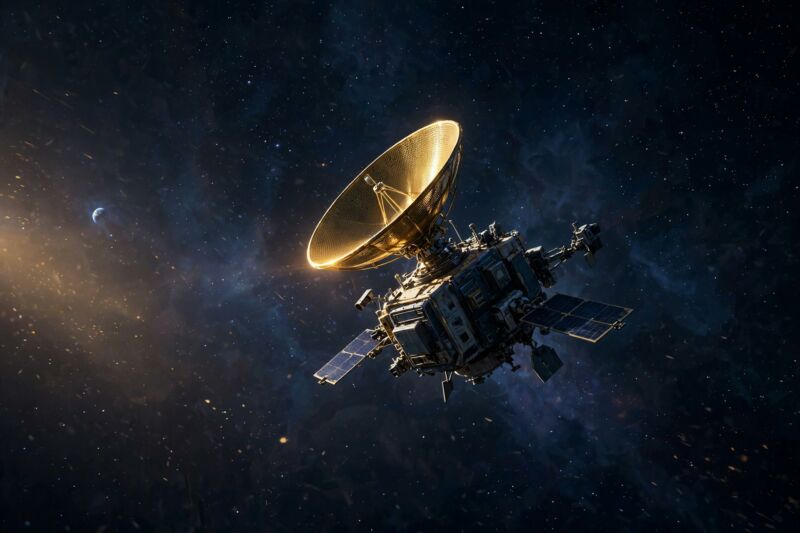
Image for the Tweet beginning: NASA's Voyager 1 just became Twitter feed image.
Reply on Twitter 2123138587462094938 Retweet on Twitter 2123138587462094938 0 Like on Twitter 2123138587462094938 1 Twitter 2123138587462094938
TheCuriousHubX avatar theCuriousPlanetHub @TheCuriousHubX ·
6h 2123129110587424809

16 billion miles. 38,026 mph. 24 hours at the speed of light. 🤯🛰️

At 5:16 a.m. EST today, NASA’s Voyager 1 became the first human-made object to reach one light-day from Earth—meaning a radio signal now takes a full day to reach it in interstellar space.

#Voyager1 #NASA #Space
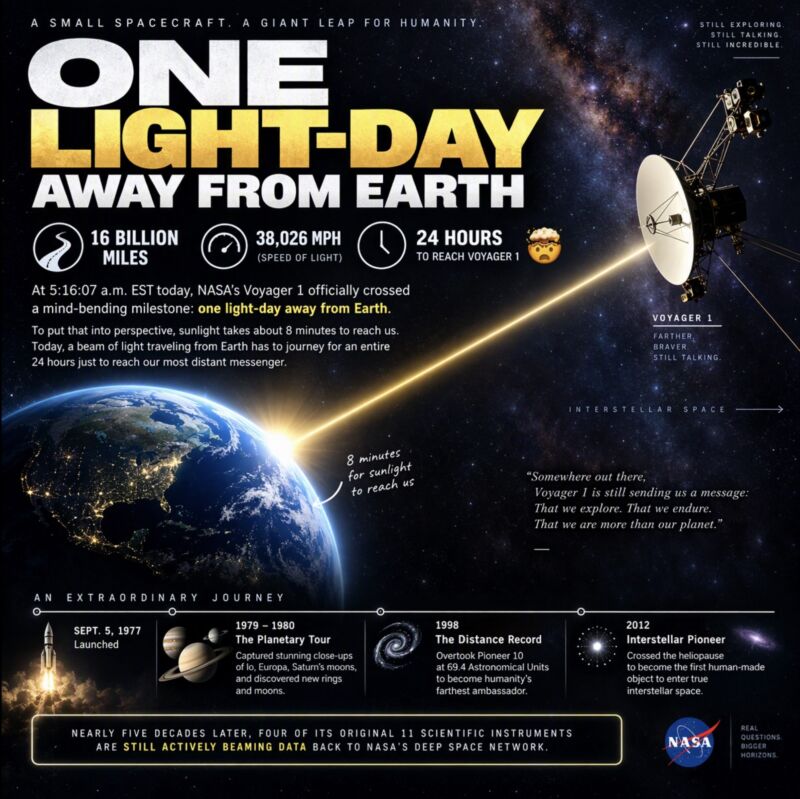
Image for the Tweet beginning: 16 billion miles. 38,026 mph. Twitter feed image.
Reply on Twitter 2123129110587424809 Retweet on Twitter 2123129110587424809 1 Like on Twitter 2123129110587424809 1 Twitter 2123129110587424809
DailyUplink avatar DailyUplink @DailyUplink ·
7h 2123117724503355892

Every message to Voyager 1 now arrives tomorrow. Literally.

At 4:16 AM CT today, NASA's 49-year-old probe became the first human-made object one light-day from Earth, about 16.1 billion miles out. A radio signal now takes 24 hours each way.

#Voyager1 #NASA
Image for the Tweet beginning: Every message to Voyager 1 Twitter feed image.
Reply on Twitter 2123117724503355892 Retweet on Twitter 2123117724503355892 0 Like on Twitter 2123117724503355892 1 Twitter 2123117724503355892
just_mesaya avatar ༒☯︎Son Of Grace༒ @just_mesaya ·
9h 2123074193231093833

Humanity's farthest spacecraft is reaching another historic milestone.

NASA's Voyager 1 is set to become the first human-made object one light-day from Earth — about 25.9 billion kilometres away.

A message now takes a full day just to reach it. @NASA #Space
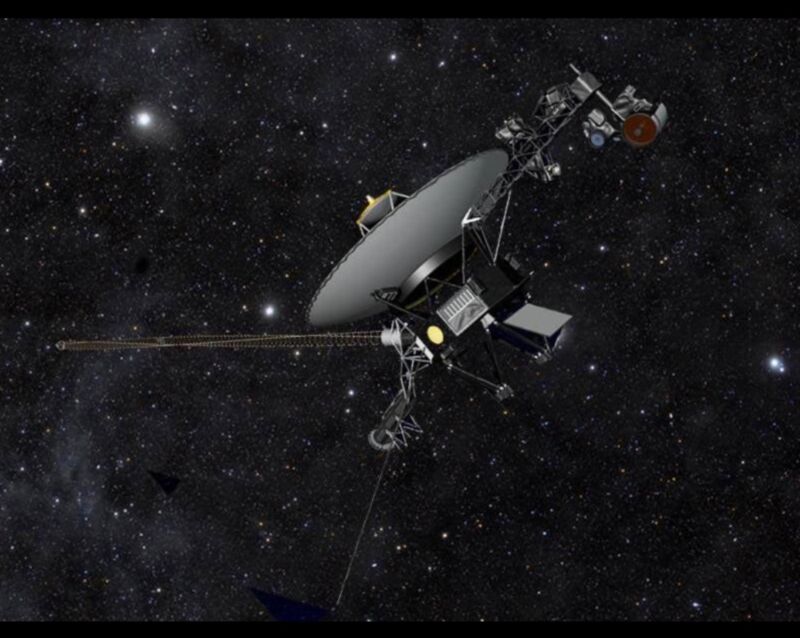
Image for the Tweet beginning: Humanity's farthest spacecraft is reaching Twitter feed image.
Reply on Twitter 2123074193231093833 Retweet on Twitter 2123074193231093833 0 Like on Twitter 2123074193231093833 20 Twitter 2123074193231093833
Load More...

Site Menu

About CDSE

Our Team

Annual Report

Board of Directors

Missions

Human Deep Space Exploration

To the Moon and Beyond

Artemis Mission Phases

Hardware Systems

What is Deep Space?

Space Science

Resources

Congressional Space Studies Series

CDSE Blog

Coalition Statements

Policy Documents

Deep Space Suppliers

Deep Space Podcast

Membership

Coalition Members

Join Us

Members Login

News

Weekly CDSE Extra

Contacts

Contact Us

© Coalition For Deep Space Exploration. ® All Rights Reserved. 2026 Design and Support: BTM Team.