
Wow! First Imagery From Comet Flyby
NASA’s EPOXI mission has flown by comet Hartley 2 today, producing staggering images of the object. “This is a day that scientists live for,” said JPL scientist, Don Yeomans, an asteroid and comet expert. More than one jet was caught shooting out from the comet, he...Calculator Estimates Calamity from Comet/Asteroid Impact of Earth
If you’re concerned about incoming asteroids smacking into the Earth, now you can calculate ahead of time the calamity a comet or space rock would cause if it hit our home planet. Researchers at Purdue University in West Lafayette, Indiana have unveiled Impact:...Comet Flyby: Stand By for Strangeness
NASA’s EPOXI mission is closing in on its target – comet Hartley2. The spacecraft is to fly within 700 kilometers (435 miles) of the comet’s nucleus on Thursday, November 4. Closest approach of comet Hartley 2 is expected to occur at roughly 9:50 am EDT, 6:50 am PDT)....This Week: A Comet Close-Up!
NASA’s EPOXI mission is set for an up close and personal look at comet Hartley 2 on Thursday, November 4. Cameras onboard the mission spacecraft will get within 700 kilometers (that’s about 435 miles!) of the comet. The name EPOXI itself is a combination of the...Asteroid Impact on Earth: Dramatic Environmental Effects
If a medium-sized asteroid smacked into deep ocean waters here on Earth, what are the consequences? Elisabetta Pierazzo, a senior scientist at the Planetary Science Institute (PSI) in Tucson, has some bad news. An asteroid crashing into the deep ocean could have...Book Review: From Jars to the Stars – How Ball Came to Build a Comet-Hunting Machine
From Jars to the Stars – How Ball Came to Build a Comet-Hunting Machine by Todd Neff; Earthviewmedia; Denver, Colorado; $24.95 (trade paperback); 2010. Here’s a fascinating book that’s perfect for reading as NASA’s Deep Impact/EPOXI spacecraft makes a breathtaking...Asteroid Threat to Earth: Office of Planetary Defense Backed
How best to deal with an incoming Near Earth Object – or NEO for short — is getting increased attention in Washington, D.C. It’s called planetary defense, an ability to fend off an asteroid on a trajectory that will strike Earth. That vision has moved from...Japan’s Hayabusa Probe: Tiny Asteroid Bits Possibly Snagged
There’s heightened excitement by officials at the Japan Aerospace Exploration Agency (JAXA). Analysis of the tiny contents within the Hayabusa sample capsule that returned to Earth from asteroid Itokawa may indeed be minute particles of the visited space rock....Saturn Moon – A Hazy, Cozy Atmosphere for Life?
Titan is Saturn’s largest moon, enshrouded by a smog-like haze. Work by a University of Arizona (UA) research team has simulated that haze, finding amino acids and nucleotide bases – the most important ingredients of life on Earth. “Our team is the first to be able to...Space Talk

#ICYMI: Over 11,000 pounds of new science and supplies are on its way to the International Space Station after @NorthropGrumman's Cygnus XL cargo spacecraft launched atop a @SpaceX Falcon 9 rocket from Cape Canaveral Space Force Station in Florida on Saturday, April 11, 2026.
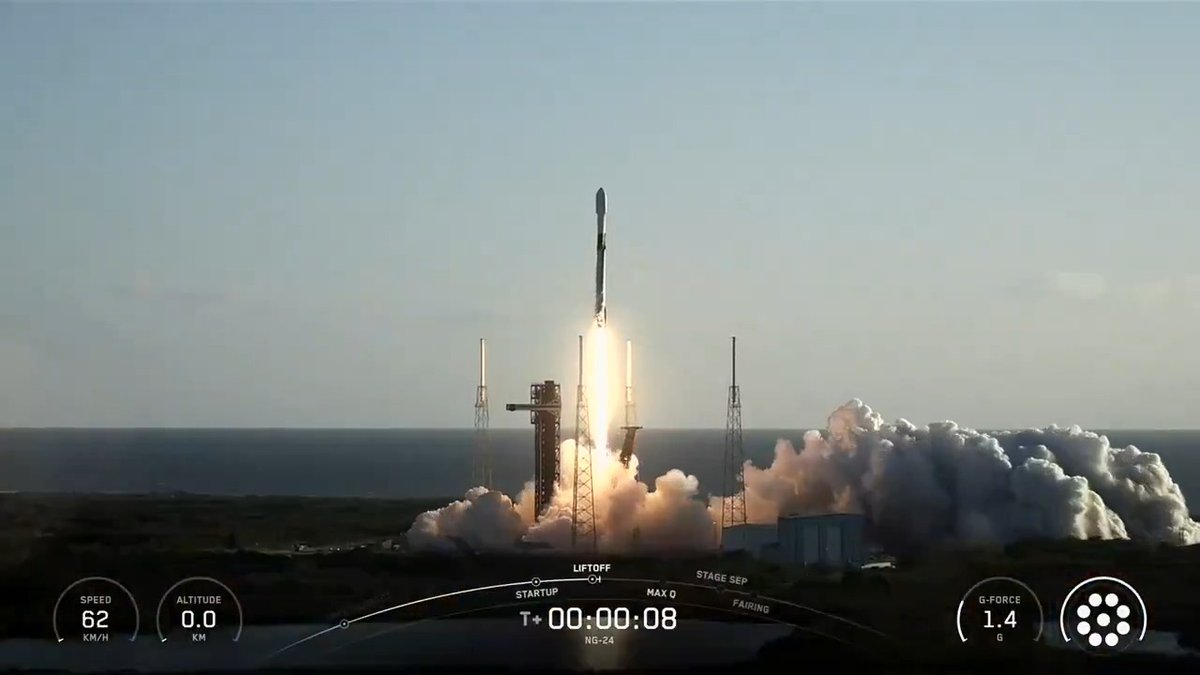
.@NorthropGrumman's Cygnus XL cargo craft is counting down to a launch atop a @SpaceX Falcon 9 rocket at 7:41am ET today to resupply the Exp 74 crew with new science and supplies.
Si las niñas de esta generación quieren conocer a una verdadera #Feminista (No la de las axilas peludas que agreden a los hombres y vandalizan iglesias) pues solo tienen que Googlear #CristinaKoch mujer histórica seleccionada por la #Nasa para la misión #ARTEMISII convirtiéndose

@bonzack @methaloxmatcha @planetdeimos @Space_Ninja7 What a special night!