
Environmental Researcher Appointed NASA Chief Scientist
Soon, NASA will have its first chief science officer in five years. Waleed Abdalati, director of the University of Colorado’s Earth Science and Observation Center, will take the NASA post, effective Jan. 3. Abdalati, a 10-year NASA veteran will serve as a top...Japan’s Venus Orbiter: Not Injected into Planned Orbit
Japan’s Venus orbiter — the AKATSUKI spacecraft — has failed to reach an intended orbit insertion around the veiled planet. Officials at the Japan Aerospace Exploration Agency (JAXA) have announced that the planned December 7 injection into Venus orbit was...(Update) New Venus Arrival! Japan’s AKATSUKI Orbiter
Japan is initiating a hoped for start of a new era in Venusian exploration with the orbit insertion around the veiled planet on December 7 of its AKATSUKI spacecraft. However, the exact whereabouts of the orbiter is not known due to loss of contact with the craft by...Arsenic-laced Bacteria Sheds New Light on Search for Extraterrestrial Life
Scientists have identified a surprising form of bacteria that incorporates toxic arsenic rather than traditional phosphorus into the backbone of its DNA, the microscopic genetic material found in the nucleus of cells. The surprising finding re-defines under what...Saturn’s Moon, Rhea – Thin Atmosphere Detected
It is the first time a spacecraft has captured direct evidence of an oxygen atmosphere at a world other than Earth. The flyby measurements of the Cassini-Huygens spacecraft at Saturn’s moon Rhea reveal a tenuous oxygen-carbon dioxide atmosphere. The NASA-led...Back to the Moon: Human and Robot Partnership Charted
Industry space planners are scoping out next steps beyond low Earth orbit – but with a trajectory twist: Exploring the Moon’s hidden farside from the L2 Lagrange Point. Stationed in that L2 slot a piloted spacecraft would be synchronized with the Moon in its orbit...IAA Urges Wider International Cooperation in the Exploration of Space
The human exploration of Mars figures prominently in a new declaration from 30 nations supporting global cooperation in the future exploration and uses of space, under the banner of the half-century old International Academy of Astronautics. At a Washington summit on...Japan’s Hayabusa Probe Reportedly Contains Particles from Asteroid
A sample container from Japan’s Hayabusa spacecraft that returned from its seven year round-trip to asteroid Itokawa earlier this year reportedly does contain particles from the space rock. According to several press reports, an analysis of some 1,500 particles found...Beyond Low Earth Orbit: Gateway Space Facility Proposed
A study team, comprised of NASA, university and research institute planners, has taken a dedicated look at a flexible path to multiple destinations in space. The focus of the group is to evaluate concepts for post-International Space Station (ISS) space habitation...Space Talk

#ICYMI: Over 11,000 pounds of new science and supplies are on its way to the International Space Station after @NorthropGrumman's Cygnus XL cargo spacecraft launched atop a @SpaceX Falcon 9 rocket from Cape Canaveral Space Force Station in Florida on Saturday, April 11, 2026.
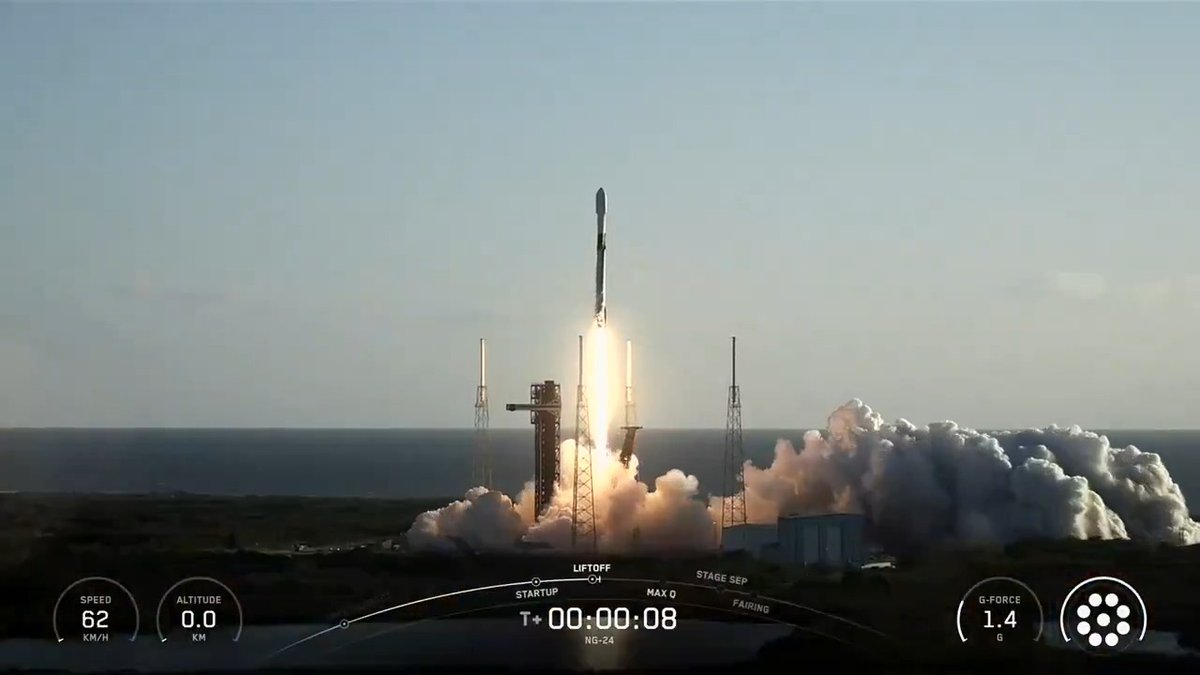
.@NorthropGrumman's Cygnus XL cargo craft is counting down to a launch atop a @SpaceX Falcon 9 rocket at 7:41am ET today to resupply the Exp 74 crew with new science and supplies.
Si las niñas de esta generación quieren conocer a una verdadera #Feminista (No la de las axilas peludas que agreden a los hombres y vandalizan iglesias) pues solo tienen que Googlear #CristinaKoch mujer histórica seleccionada por la #Nasa para la misión #ARTEMISII convirtiéndose

@bonzack @methaloxmatcha @planetdeimos @Space_Ninja7 What a special night!