Saturn’s Moon, Rhea – Thin Atmosphere Detected
It is the first time a spacecraft has captured direct evidence of an oxygen atmosphere at a world other than Earth. The flyby measurements of the Cassini-Huygens spacecraft at Saturn’s moon Rhea reveal a tenuous oxygen-carbon dioxide atmosphere. The NASA-led...Back to the Moon: Human and Robot Partnership Charted
Industry space planners are scoping out next steps beyond low Earth orbit – but with a trajectory twist: Exploring the Moon’s hidden farside from the L2 Lagrange Point. Stationed in that L2 slot a piloted spacecraft would be synchronized with the Moon in its orbit...Beyond Low Earth Orbit: “Gateway” Habitats Advocated
A NASA, university and industry team is studying mid-decade human exploration beyond low Earth orbit. Detailed by the team are options for long-duration “Gateway” habitats. An interim look at such a prospect is being briefed at high-levels within NASA, a plan that...Space Traffic Control: Avoiding Collisions in Earth Orbit
If you’re trying to avoid future collisions of satellites, something akin to a space traffic control system is likely in the offing. This year alone, dozens of spacecraft have been purposely jockeyed around to lessen the chance of running into trouble. Today it’s...Book Review: Trailblazing Mars – NASA’s Next Giant Leap
Trailblazing Mars – NASA’s Next Giant Leap by Pat Duggins; University Press of Florida; Gainesville, Florida; $24.95 (hard cover); 2010. The distant reddish hue of Mars in the night sky is a magnet for exploration. Eye-catching glimpses of the red planet were first...CubeSat Canopy Experiment: Dealing with Interplanetary Flyspecks
Tiny, hold in your hand satellites, are dubbed CubeSats. They hitch rides on boosters carrying larger satellites. CubeSats can conduct all types of experiments, from Earth remote sensing to monitoring the space environment. According to Stanford news writer, Louis...Radar Mosaics Provide Unique Views of Earth
For the last 15 years, Canada’s RADARSAT-1 has observed the Earth from space. RADARSAT-1 is a sophisticated Earth observation satellite developed by Canada to monitor environmental changes and the planet’s natural resources. Launched in November 1995, RADARSAT-1...Our Planet – Art Work Captured by Satellites
Earth never looked so good! Thanks to the U.S. Geological Survey (USGS), a space-based look back on our piece of celestial real estate offers an art-filled eye-full. The USGS has unveiled “Earth as Art3” – a collection of the latest set of NASA Landsat satellite...Japan’s Hayabusa Probe Reportedly Contains Particles from Asteroid
A sample container from Japan’s Hayabusa spacecraft that returned from its seven year round-trip to asteroid Itokawa earlier this year reportedly does contain particles from the space rock. According to several press reports, an analysis of some 1,500 particles found...Space Talk

¡Bienvenidos a la última ronda de este torneo!
Impresionantemente, blast man llegó a la final, derrotando a metal man!
Ahora, ¿tendrá la misma suerte con nuestra querida y adorada splash woman?
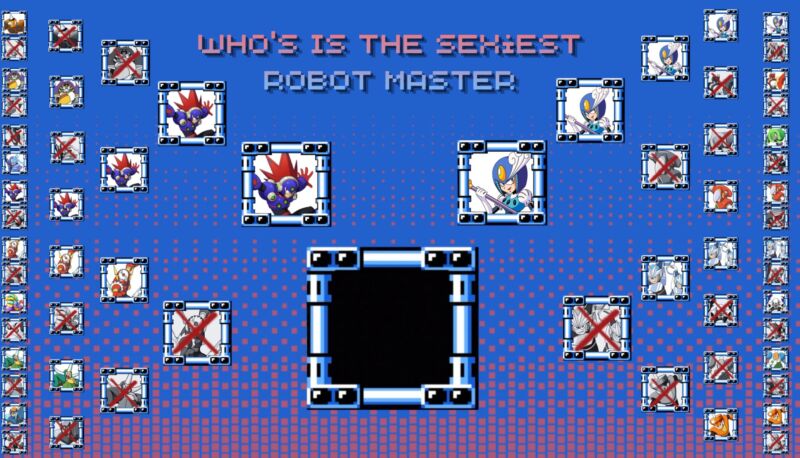
@cherrypunpun__ FRAUDEEEEEEE FRAUDEEEE SI PIERDE SPLASH WOMAN ASUMIRÉ FRAUDE ELECTORAL POR PARTE DE #esa CUENTA
A failed memory chip, no free space big enough for the code, and 22.5 hours for every command to arrive. Full story on Hard Limits Lab. Images: NASA/JPL-Caltech. #Voyager1 #NASA #Shorts

🚀 The day a rocket came back home.
On December 21, 2015, SpaceX landed a Falcon 9 booster upright at Cape Canaveral after launching satellites into orbit, something no orbital rocket had done before. It changed the cost of reaching space.
#SpaceX #Falcon9 #Space

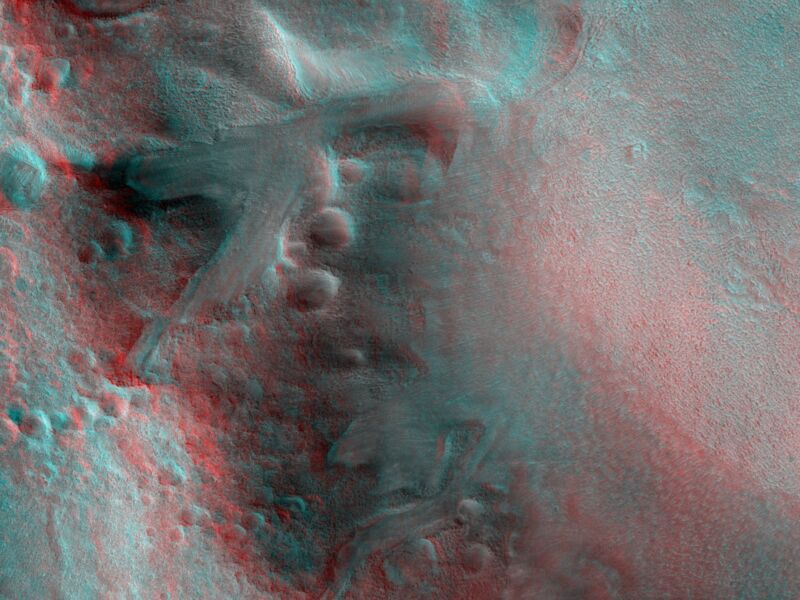
HiRISE 3D: A Small Channel
The objective of this observation is to examine a small channel on the wall of an old impact crater. The scene is also visible in Context Camera image data.
https://www.uahirise.org/anaglyph/ESP_093931_2185_ESP_094010_2185_RED
NASA/JPL-Caltech/University of Arizona
#Mars #NASA #science