

Pieces are coming together to test the most powerful rocket in the world.
To ensure components of NASA’s Space Launch System (SLS) will be able to handle the forces of flight, structural test articles have been created.
Last month, an important test article component traveled by barge through a river in North Alabama to reach NASA’s Marshall Space Flight Center. This component, the interim cryogenic propulsion stage (ICPS), is part of the rocket’s upper stage.

Credits: NASA/MSFC Image: Emmett Given
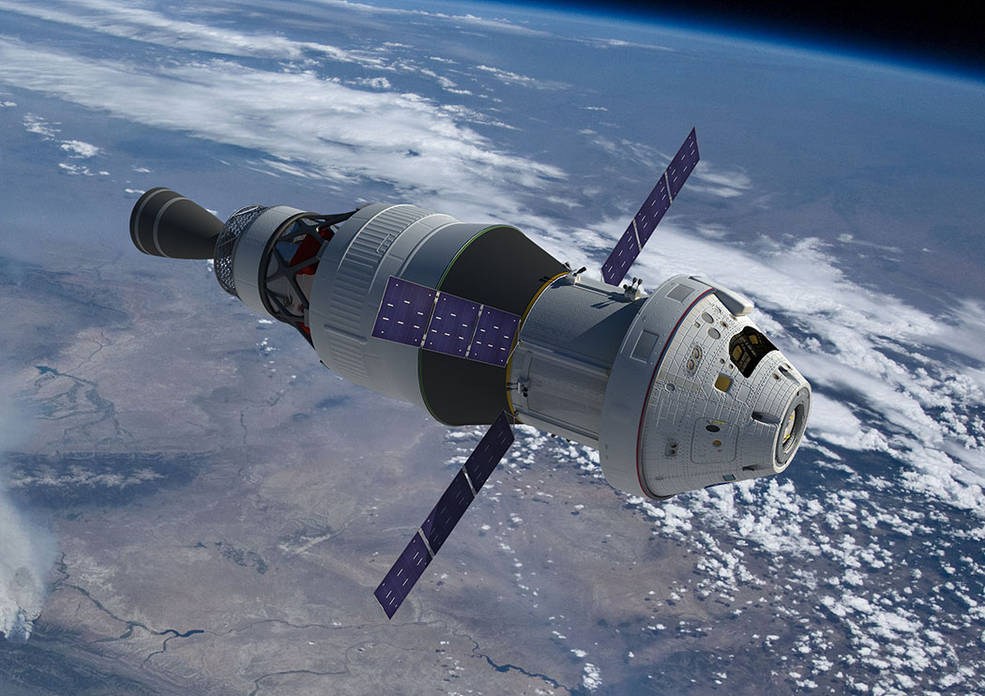
This test article joins other structural test articles and simulators of the upper portion. ICPS will provide in-space propulsion for the new Orion crew vehicle to fly beyond the moon. It uses liquid oxygen and liquid hydrogen to produce thrust. As SLS evolves, future configurations of the rocket will have a more powerful exploration upper stage to enable enhanced crew and cargo capabilities.
During launch, the Orion crew vehicle and launch abort system will be located above the ICPS. Below the ICPS will be the launch vehicle stage adapter (LVSA) which connects the ICPS to the core stage. Welding of the LVSA structural test article has been completed and installation for hundreds of sensors has begun.
The test articles for both ICPS and LVSA will be stacked together with other test articles later this year. They will undergo a series of tests and the collected data will be compared to computer models. By doing this, engineers will make sure the components are able to withstand flight forces.
Other structural test articles of the rocket’s upper portion include the Orion spacecraft simulator, the Orion stage adapter that connects Orion to ICPS, and the top of the core stage. All of these have been completed.
As engineers prepare for the upcoming test series, they are building the equipment to transport the structural test articles to the test stand.
The design for ICPS comes from a modification of the second stage of United Launch Alliance’s Delta IV launch vehicle. Some small changes were made to avionics, the liquid hydrogen tank for ICPS, and attitude control to better serve the Orion spacecraft. The stage will be powered by an RL-10B engine from Coalition founding member Aerojet Rocketdyne.

Image credit: NASA/MSFC
NASA’s SLS will launch for the first time in 2018. Known as Exploration Mission-1 (EM-1), SLS will send an uncrewed Orion capsule past the moon and return it to Earth. The capsule will be manned on future missions. The continuing hard work on the most powerful rocket in the world will enable NASA to send humans deeper into space than they’ve ever gone before, and eventually onward to Mars.
For more about SLS, check out NASA.gov.